Abstract
Method
A set of K impact recordings from the same object is encoded, pooled as an unordered set, and mapped to continuous, renderer-compatible material parameters. Blend supervision regularizes both the prediction and the latent representation.
Training combines a target-weighted regression loss, a soft-label material classification head, a blend regression term, and a latent blend consistency loss that aligns a blend's audio latent with the interpolation of its two base-material latents — teaching a continuous acoustic-to-physical mapping instead of a lookup over discrete classes.
Physical modal analysis
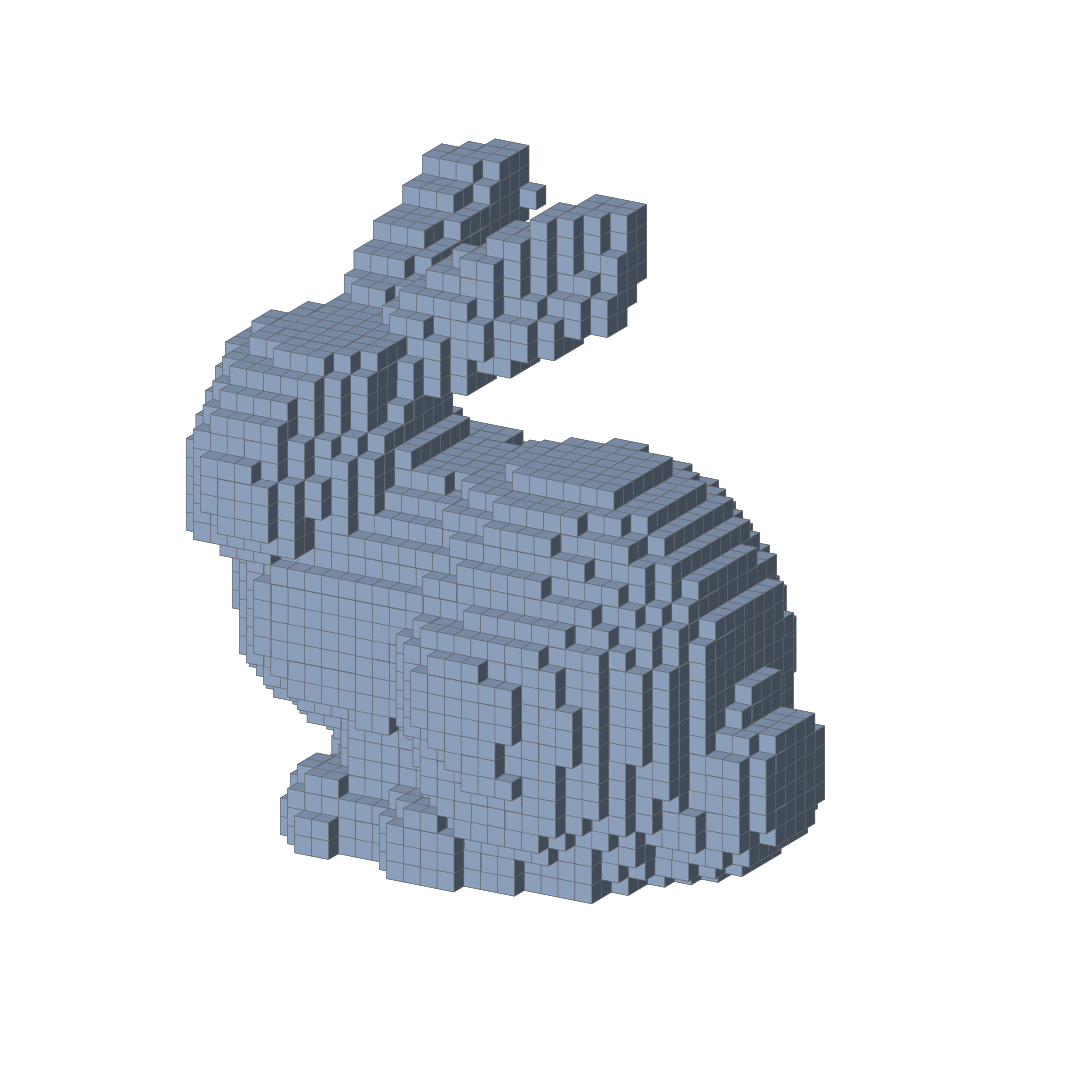
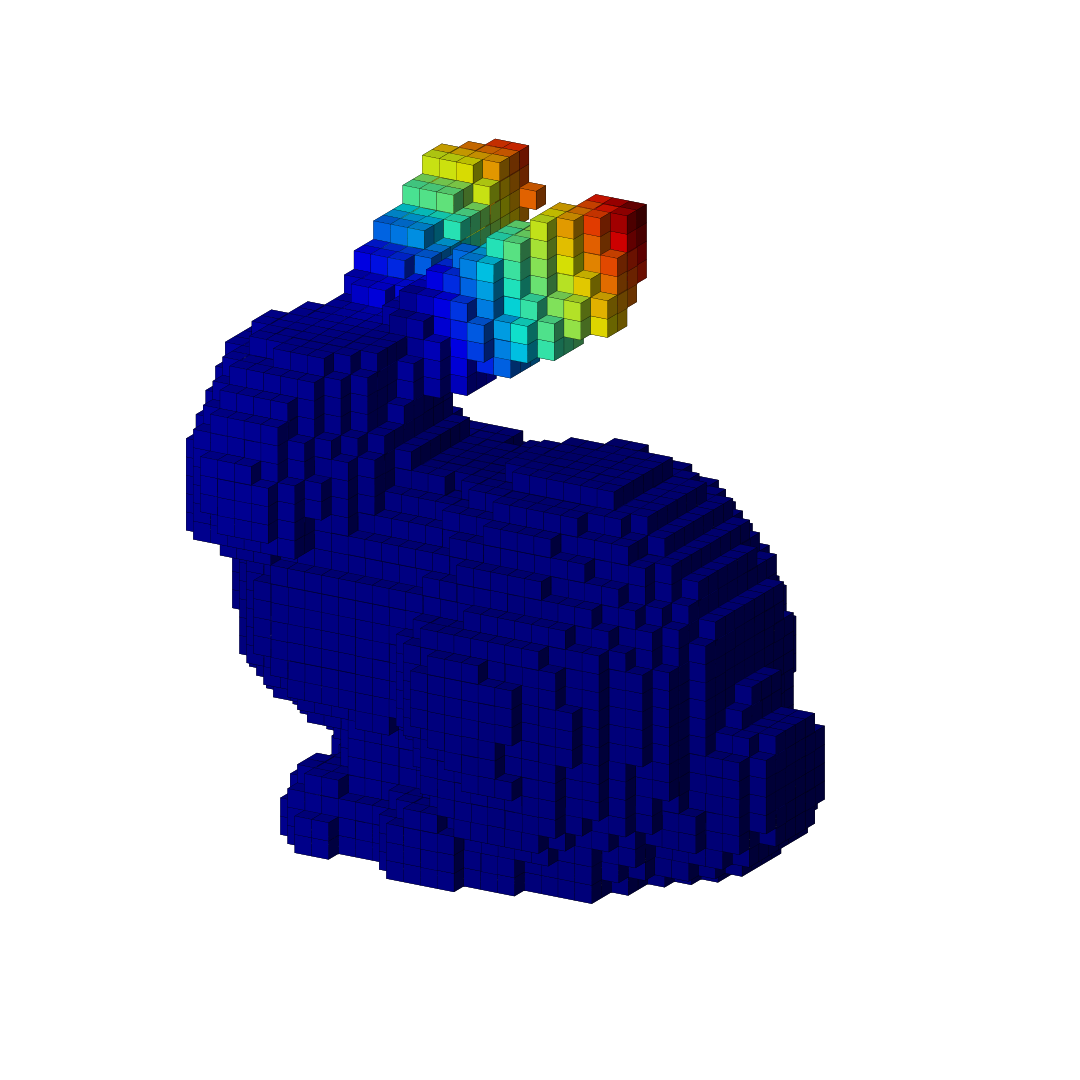
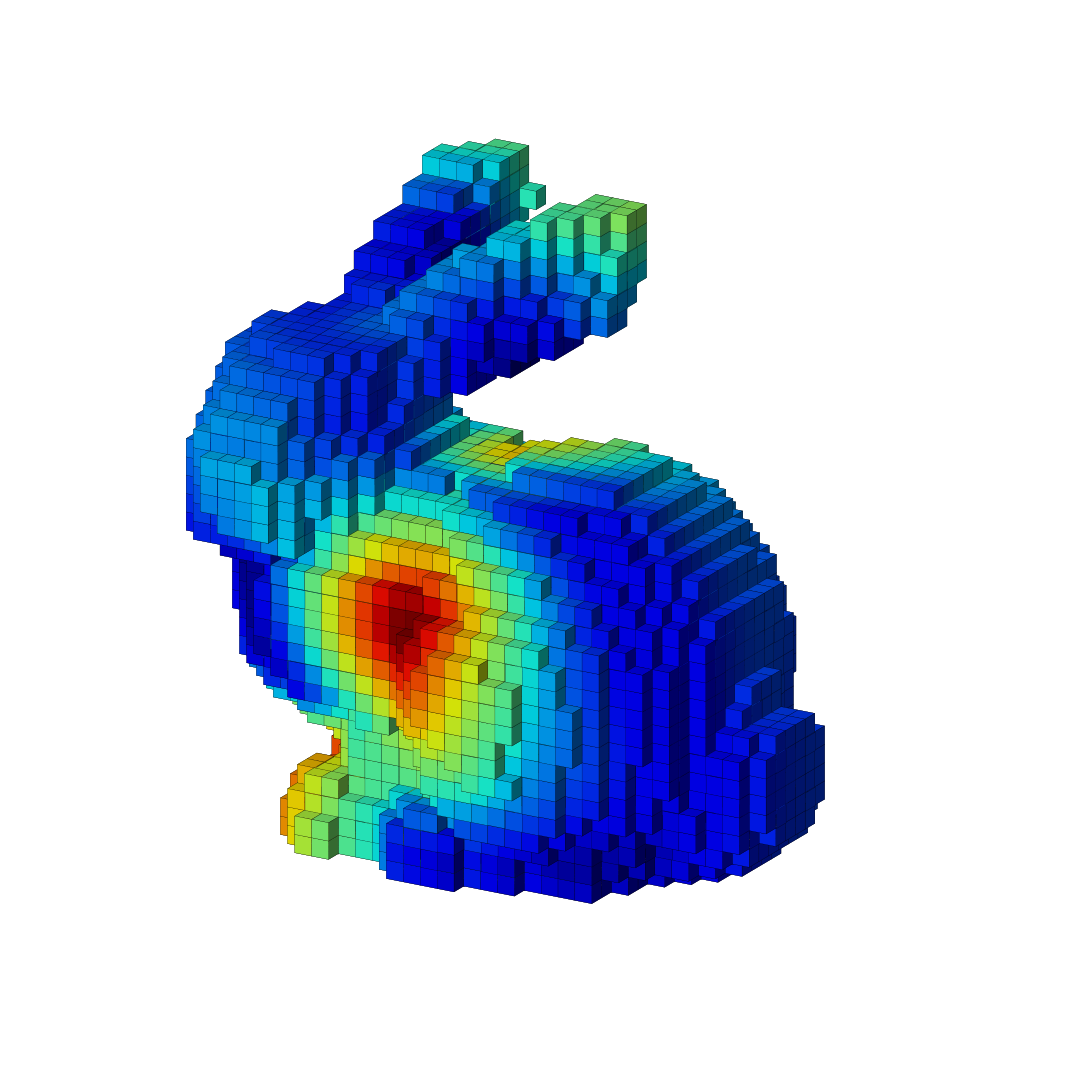
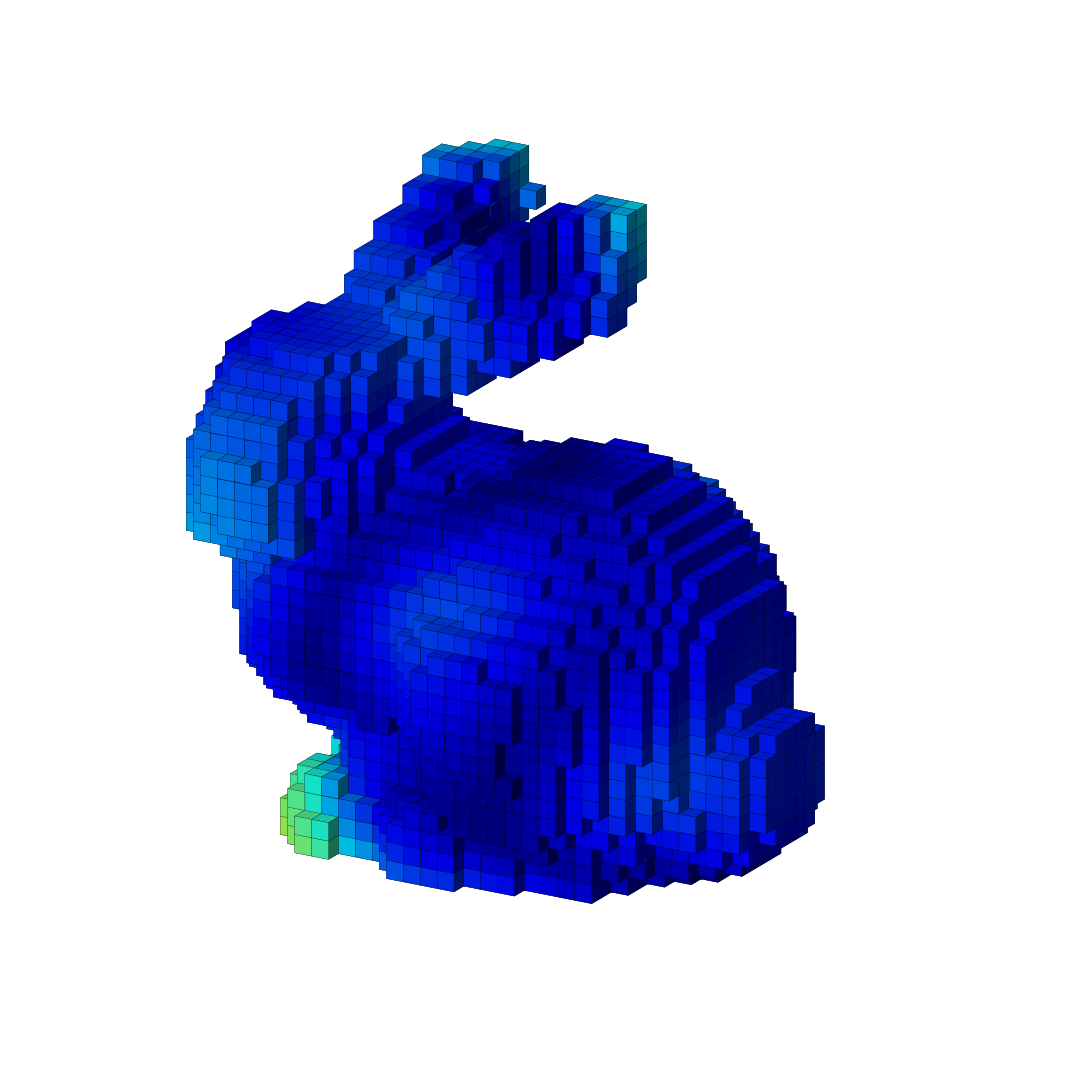
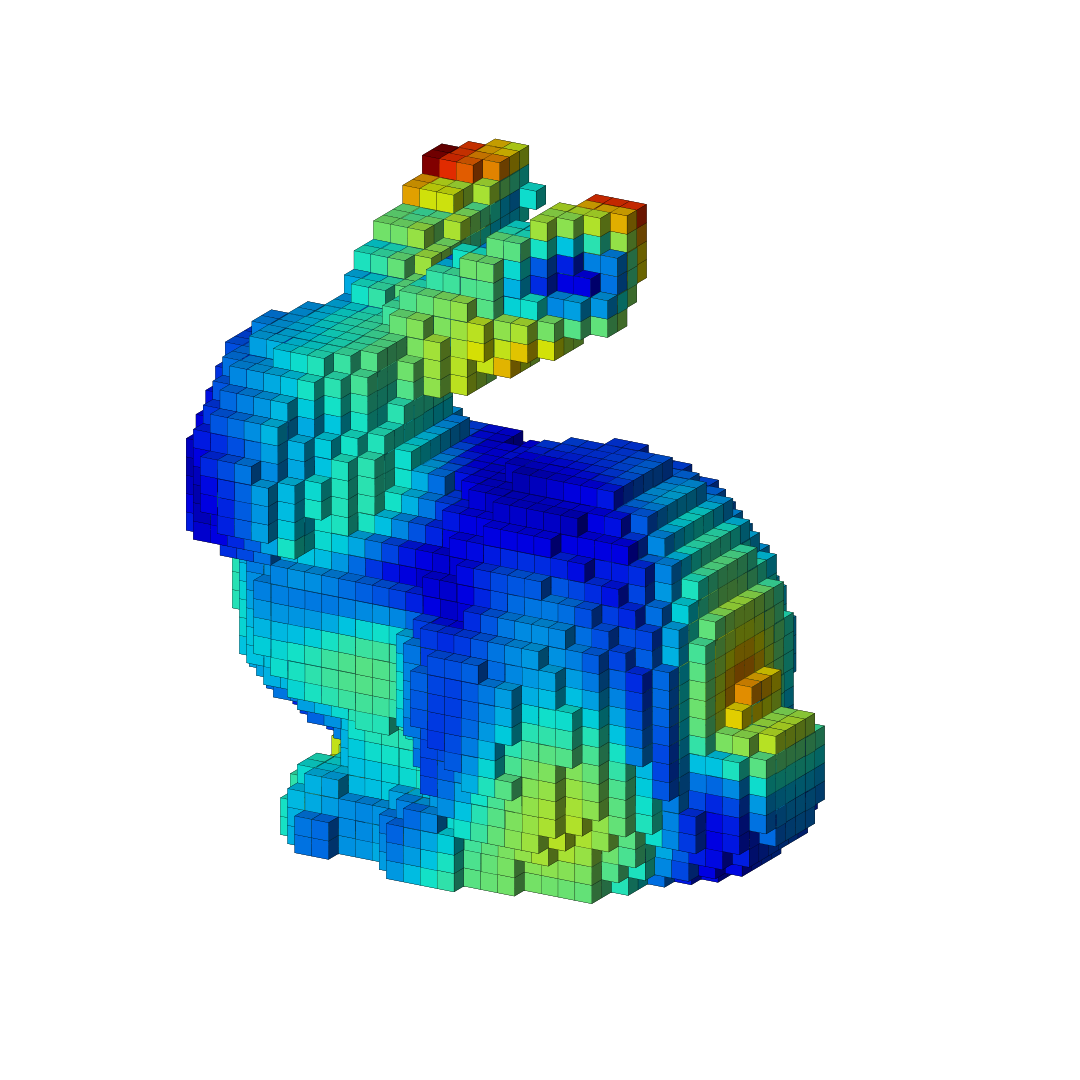
The parameters are renderer-compatible: every object is voxelized and solved with FEM modal analysis, and the estimated parameters drive the same modal synthesizer at re-render time — so the whole loop, from geometry to sound, stays physically grounded. Below: a voxelized mesh and several of its FEM vibration modes (displacement magnitude).
Listen · Synthetic re-rendering
For each object we play the input impact and the sound re-rendered from our predicted parameters (FEM modal synthesis, same object & hit). Close match = accurate parameters.
Bowl · pure

Vessel · pure

Object · pure

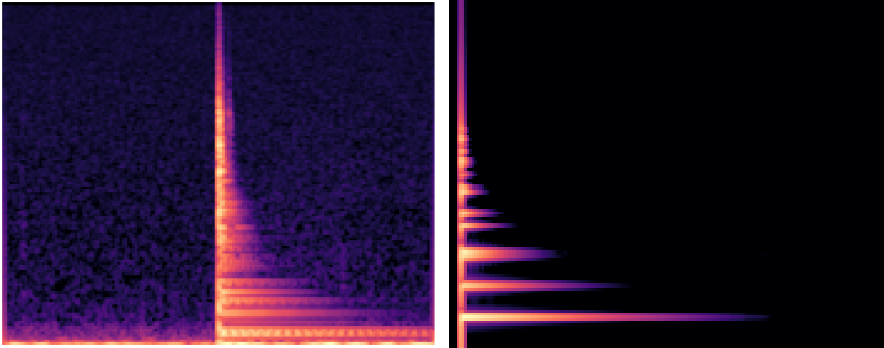
Log-mel spectrograms (onset-aligned): the re-render reproduces the input's modal structure and decay from the predicted parameters alone.
Continuous material blends
Because the targets are continuous, a material can be interpolated. Drag the slider to morph one object from Plastic to Ceramic: the impact sound and the underlying physical parameters move smoothly together (ρ, E, α, β by geometric mean, ν arithmetic) — the continuity our latent blend-consistency objective is built for.
Same object & strike throughout — only the material changes. Each step is a full FEM modal re-solve at the interpolated parameters.
Listen · Real-world objects
Real recordings from ObjectFolder-Real: each panel shows the log-mel of the real recording (left) next to the sound re-rendered from the material parameters our model predicted from that recording (right, playable). Hit point is arbitrary and hit time is estimated (no metadata used).
Cutting Board
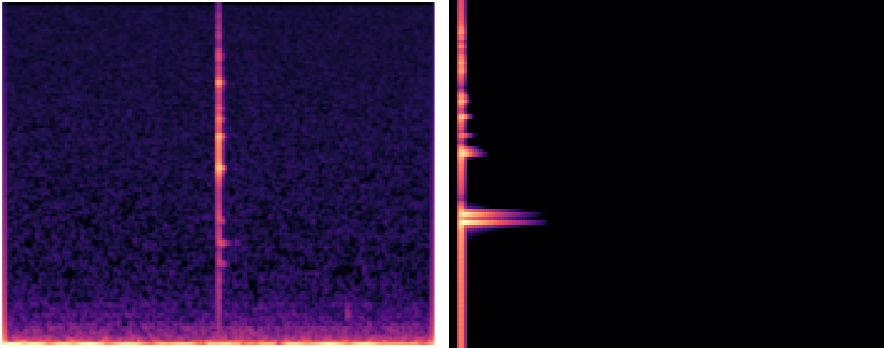
Vase (green)
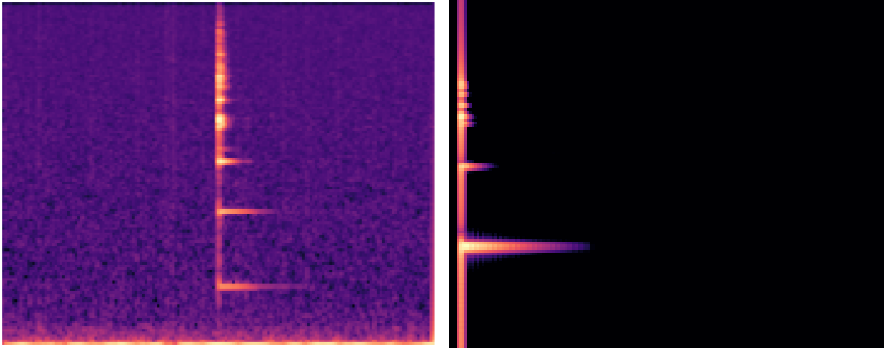
Salad Bowl
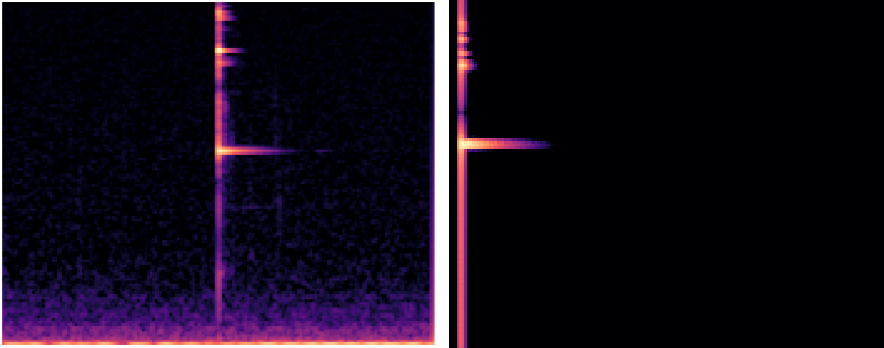
Kettlebell
🔁 Drag to rotate the 3D objects · scroll to zoom. Meshes & textures from ObjectFolder-Real.
Results
Physical-parameter estimation error (MAE, lower is better). ρ and E in log-space; ν linear; α, β in physical units. Our supervised regressor is far below conventional DSP regression and in-context learning with general audio–language models.
| Method | Subset | ρ | E | ν | α | β | Avg. NMAE |
|---|---|---|---|---|---|---|---|
| Conventional regression | |||||||
| DSP + reg. | Single | 0.190 | 0.443 | 0.047 | 9.93 | 3.26×10⁻⁷ | – |
| DSP + reg. | Blend | 0.131 | 0.321 | 0.032 | 5.19 | 1.83×10⁻⁷ | – |
| In-context learning (audio–language models) | |||||||
| Qwen2.5-Omni-7B | Single | 0.338 | 0.614 | 0.071 | 13.38 | 1.61×10⁻¹ | – |
| Audio Flamingo 3 | Single | 14.1 | 2.14 | 0.130 | 21.7 | 1.8×10⁻² | – |
| Supervised (ours) | |||||||
| Ours | Single | 0.081 | 0.140 | 0.008 | 0.59 | 2.39×10⁻⁸ | 0.078 |
| Ours | Blend | 0.119 | 0.206 | 0.012 | 1.08 | 1.32×10⁻⁸ | 0.116 |
Averaging more impacts at inference (K = 1 → 8) further reduces error (all-sample NMAE 0.112 → 0.093), as set pooling stably combines multiple observations.
BibTeX
@article{cho2026impactmat,
  title   = {ImpactMat: Continuous Material Estimation from Impact Sounds for Inverse Sound Rendering},
  author  = {Cho, Hyebin and Kim, Bumsoo and Chung, Joon Son},
  journal = {arXiv preprint},
  year    = {2026}
}